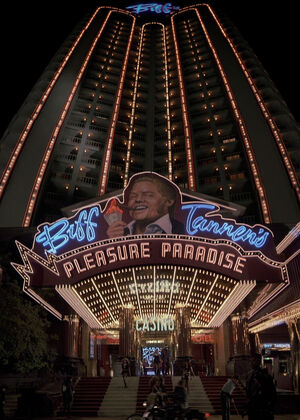
Friday, November 16, 2012

The long strange voyage of Paul Kamenz

Interested as I am in the odd corners of history there are certain areas that I find fascinating and keep coming back to study.  In particular the tale of disguised commerce raiders that I have touched upon once or twice is one of those marvelous anachronistic things that seems such a throwback to an earlier age of salt and sail.

And such odd stories.

Consider the travel itinerary of a certain Kapitanleutnant (Lieutenant Commander) Paul Kamenz.  He was the Navigation officer of the German commerce raider Atlantis.  This warship in disguise had a successful career in the early days of World War Two, traveling about 100,000 miles in a cruise that lasted 602 days.

Atlantis

Seven months into their voyage Atlantis had by chance captured a British ship, the Automedon, off of Java.  The Automedon was indiscreetly carrying a highly classified report on British defenses in the Far East as well as various code and cypher charts.  Recognizing the value of this information Kamenz was put in charge of a prize crew that took the information to then neutral Japan aboard a captured tanker.

From Tokyo Kamenz had to travel to Vladivostok, Russia and hand carry the intelligence information 5,000 miles over the Trans Siberian Railway to Berlin. 

After he was given only a brief rest he then had to report to occupied France, where he boarded a U-boat, later transferring to a blockade running supply ship, and finally rejoining Atlantis in the Indian Ocean in April of 1941.

In November of 1941 the precarious career of Atlantis came to an end.  While resupplying a U-boat they were sighted by a British cruiser who shelled them from a safe range then steamed off over the horizon.  Kamenz and the roughly 300 survivors of the Atlantis were left bobbing about in life boats.  The U-boat obligingly took them in tow, heading for the distant coast of Brazil.

Things started to look up when a German supply ship, Python, was able to rendezvous with the castaway flotilla and take the shipwrecked Atlantis crewmen aboard.  But only a few days later when Python was refueling another U-boat the same disaster struck....a British cruiser appeared, shelled the German ship into a broken wreck and steamed off. 

(To be fair to the Royal Navy, the U-boat did manage to launch torpedoes this time that missed.  The Germans suspected, correctly as it turned out, that their naval codes had been broken).

Now the crews of Atlantis and Python were in the same boat.  Or literally the same lifeboats.  But somehow several German and Italian submarines were summoned to the South Atlantic and everyone was crammed into all available space for a claustrophobic but successful trip back to France.

Thus concluded the long strange voyage of Paul Kamenz.  He traveled the lonely parts of the ocean as an officer of a modern day privateer.  He rubbed elbows with diplomats and spies in Japan during the run up to Pearl Harbor.  He took an epic train journey over thousands of miles of Siberia a few short months before Russia and Germany engaged in a battle to the death.  Then in the face of rising British naval strength he made a second sea journey by life boat, two or three different submarines and on three different surface ships, two of which were sunk under him!

Of this remarkable fellow I have found few later traces.  His would have been a remarkable biography to read in detail.

Wednesday, November 14, 2012

The Theater Ship and Monkey Purveyor to the Royal Navy

The Royal Navy in World War One had a bit of a problem.  They had built the Grand Fleet, the largest collection of capitol ships the world will ever see.  And all those mighty dreadnoughts had so very little to do.  The German navy simply refused to cooperate and for most of the war these powerful antagonists just glared at each other across the North Sea.

For the British in particular it got boring.  Their main fleet anchorage was a bleak place called Scapa Flow, way up in the Orkney Islands north of Scotland.  Oh, they tried to keep busy with gunnery drills, the occasional patrol and lots of polishing of brass, but there are limits to human patience...

So the Royal Navy dispatched an unusual pair of ships to Scapa Flow, the S.S. Gourka and the S.S. Borodino.  Although serving as Royal Navy auxilliaries they kept their civilian designations.  Their mission was to bring cheer to the Grand Fleet, or at least to its officers.

These were identical "sister ships", the Russian names reflecting their original purpose which was conducting a trade in food stuffs between St. Petersburg and Britain.

The Borodino is by far the better documented ship.   Here is a fascinating monograph on its career.

The Admiralty arranged for a private firm called The Junior Army and Navy Stores Ltd. to be named Contractors to H.M. Grand Fleet.  The Borodino seems to have been under some sort of Admiralty control and was made available for the assignment.

In short order the Borodino was plying the waters of Scapa Flow, visiting in sequence the anchorages of individual capitol ships or the common areas for destroyers and submarines.

It was an instant success.  The Borodino stocked everything a smart young officer could desire.  This being the Royal Navy there was of course a large stock of wines and liquors, kept in a special locked bunker.  Foodstuffs, mostly of the finer quality, were to be had as supplement to Navy fare.  The cold storage areas of the ship were particularly handy, although there were problems with spirited midshipmen playing pranks such as positioning the rabbit carcasses so that the paws were held in mock salute.

If you needed your laundry done or clothes repaired, they had it covered.  Mascots could be ordered, usually dogs, birds, and ferrets but on one memorable occasion a destroyer decided they simply must have a large monkey.

The main sales counters inside the Borodino


Borodino kept up its stalwart work from 1914 clear through to the end of the war.  Of course they were not permitted to sell any ardent spirits to the American ships that arrived late in the war to share the boredom, but on the whole it was a great success all around.

The S.S. Gourko is actually a more interesting story but one with maddeningly little detail.  Although it seems to have also retained its status as a store ship it is chiefly remembered - and quite fondly - as "The Theater Ship".

It remained a food storage ship, sometimes being called "a frozen meat ship".  But an area inside was cleared and a stage was set up for theatrical productions.

This was necessary because, while the crews of the warships had no shortage of time and talent for putting on plays, they were also supposed to be ready to make steam and weigh anchor on short notice were there word of a German excursion.  They really could not have an elaborate stage set up on board.

The SS Gourko.  photo courtesy of Stuart Smith
The entertainments put on were of various types.  An American visiting the ship in December of 1917 mentions that films were shown on the deck as weather permitted.  He also describes a review show put on by the crew of the HMS Neptune, featuring "a Jewish comedian", a Charlie Chaplin imitator, and several attractive "ladies" who were no doubt made up sailors.  He also claimed that it was difficult to keep your feet warm because the theater was build directly above the main refrigerated hold.  Taking on the role of theater critic our correspondent for the Racine Journal wrote:

"The first half dozen acts were a rich mixture of sentiment and humor, the humor perhaps richer than the sentiment.  But the sentimental ditties were not badly sung, and their choruses were given by the whole crowd with a wealth of feeling that made the heart of the good ship Gourko shudder."

The link above describing the career of the SS Borodino has at its end a theatrical program from the Gourko, a musical play in three acts called The Secret.  I think we may assume that the performing troupe from the HMS Iron Duke also wrote the work....it features broadly drawn characters such as "Graf Adolph von Splitzentrausen".

Various biographies of officers with the Grand Fleet all speak fondly of the Gourko and their evenings of diversion there.  Probably none would have greater reason to appreciate it than a small group of officers of the battleship HMS Vanguard who were on the Gourko for a night of fun on 9 July, 1917.  In what was felt to be a spontaneous ammunition explosion their ship blew up with only two men on board surviving the catastrophe.

At the end of the war the Borodino and the Gourko were returned to the drudgery of civilian life, their only bit of action a possible challenge of the Borodino by a U-boat one dark night when she was heading back to Scotland for reprovisioning.  But they were both to have their moment of glory, and to be sunk for the British cause.

As the Wehrmacht blitzkrieged across France in May of 1940 the two ships were once again requisitioned by the Admiralty.  The plan was to sink them as block ships in French harbors so as to hinder German use of the ports in an upcoming invasion attempt.  The Borodino in fact was sunk in this fashion, in the Belgian port of Zeebruge.

Gourko, the Theater Ship, went out with a bit more drama.  She was destined to be intentionally sunk off of Dunkirk once the last of the BEF were evacuated.  But she missed her cue by just a little, nearing her final destination she struck a mine and went down on 4 June, 1940, just as the last Tommies were making their escape.


Saturday, November 10, 2012

Machines Behaving Badly---First Report

Weary I am at the keyboard, after a long day setting up, running and taking down the annual Machines Behaving Badly combat robotics event.  Unless there is something going on overseas that I have not heard of, I am sure that this is the biggest combat robot event for middle school kids anywhere.

25 robots.  48 matches.  In just over 4.5 hours.  Budget per robot under $20.

None of this should actually be possible, but with my gifted team of minons it is annually accomplished.

(one nuclear engineer, two electrical engineers, one English major and a "mom" who has kept helping long after her son has grown up and moved away.)

A few photos and comments.  I can usually offer up tasty video clips in a week or two....


 Part of the pit area.  In honor of hunting season and of halloween we used orange duct tape this year.


A robot named "Hellicopter"  just inside the guidelines that suggest their robot names not be something that makes their grandmother blush.  Of course, I had one kid tell me that his granny rode a Harley....


I really liked this robot.  It had immaculate camo style decor.  Here it has suffered a bit of battle damage, and as you can see this student took the atypical engineering approach of making his robot partly out of a wicker basket.  When it hit the spinning Chains of Doom the arena was littered with little bits of straw!

We gave it the Best Design award.  As the rules for this are unpublished and arbitrary we sometimes award it for coldly efficient design, or for far out innovative design.  Here...just for the pleasing aesthetics!


Not sure why this robot has the plastic butt of a chopped off troll doll as its figurehead.  It ended up winning the 3 pound championship match, so must have done some good.

For the final matches I ask the students if they want to go by "Mad Max" rules.  This year all four finalists were up for it.  No timer, no judges, fresh batteries.

"Two bots enter....One bot leaves"


So, having raised as of old the Black Flag of No Quarter...


The End for the second place finisher in the 3 pound class.


The End for the one pound second place robot.


A good time had by all....no injuries, lots of good competition.

At the end we allowed all robots still operational to pile into the arena at once in something I like to think of as a Performance Art version of Balkan History...


Friday, November 9, 2012

Machines Behaving Badly - My Patton Speech

Tomorrow is the tournament, so at High Noon two dozen robots cobbled together by middle school kids will start being forcibly reduced to their constituent parts.  Just before the first match I give a short talk along these lines:


Best of luck in the tournament.  As is the case every year I have had fun in the class and learned a few things.  I hope you can say the same.

The spectators who have come out to watch today are your moms and dads, grandpas and grandmas.  They have come to see two things.

They want to see that you have used your skills to transform an idea into something that moves and works.  Not, in all cases, for very long, but still it is a remarkable achievement.  It should not be possible to create functioning robots on this budget but you have all succeeded nicely.

They also want to see good sportsmanship.  No anger, few tears.

I am very sure you would have completely read the Tournament Rules .....if I ever published them.  

Here is the way things work:

Matches can end by knockout.  If your robot has become a paperweight or a pile of debris it is hard to see how you can injure your opponent very much. 

Matches can also be decided by judges decision.  You may disagree with the judge's call.  Varied opinions are a good thing, but the judges are right and that is final.  No arguments.

Remember that they are looking at the action from three directions.  They can see which robots are moving with purpose and which are limping along shedding parts. They also have an average of 12 years of experience in combat robotics.  You guys have an average of 12 years of experience breathing.  For sure you will see some matches won and lost that you expected would have gone the other way.

Matches can also end in surrender.  In a double elimination tournament it might make sense to throw in the towel if in an early round match you are being pushed slowly but certainly into a hazard that will make sushi out of your robot.  It is much easier to come back and fight to ultimate victory if you do not have to go looking for enough parts to glue back together for the next round.

You may well be called a cheese eating surrender monkey, but that's life.   In later round matches where it is Victory or Death we expect considerably more determination.  Sometimes both robots are being beaten up equally and the driver with the most reckless courage gets the decision.  

Let's have some fun smashing stuff into littler stuff.  Get ready to learn the importance of both steady success and of spectacular, ambitious failure.

And as always I will end by telling you the Secret to Success in Life:


Always show up on time and with your batteries fully charged.

Wednesday, November 7, 2012

Machines Behaving Badly - The Thursday Group Warming Up

I have two sections in my robotics class.  12 students each on Tuesday and on Thursday.  The Thursday group ended up having one less build session due to parent teacher conferences or some nonsense.  As such they have always been just a little bit behind the Tuesday group.

But they are hard working kids and I have been able to lay on some extra help.  One of the student teachers in the English department took an interest in the project.  And as is often the case I had a parent take me up on my offer to make welcome an additional set of supervisory adult eyes.  Both have turned out to be handy fellows, and have been helping kids with the kind of stuff that really should be watched over.....hot glue guns and sixth graders is just asking for trouble.

In any event the Thursday squadron is actually coming up with better looking machines than Tuesday.  With one build session left before our 10 November "Machines Behaving Badly" Robotolypse, here are a few sneak previews.


Here are a couple of one pounders, in what we call the "antweight" class.  The upper one will have a weight distribution issue.  Even with the battery at the far back of the machine the center of gravity will be out in front of the wheels and traction will not be ideal.  Until of course the front of the robot gets torn off, then things will improve a bit.  The second machine is built by the one girl in the class.  It will be called "Girl Power".  We usually have one or two girls in the class of 24, and they generally acquit themselves well in combat.

I have started offering the kids gearboxes from derelict Barby Jeeps.  They come my way with some regularity and are a good weapon choice.  They are emphatic and cool to watch in action.  They are also a nice challenge for the kids as they are difficult to mount securely and just at the upper limits of what you can afford in weight and stay under the three pound, beetleweight, limit.  The weapon bar here is a piece of lexan.  The black patch is velcro...I got an enormous roll of this at Axman surplus and we use it for quick change on the batteries and electronics.  Otherwise the robots become big sticky balls of duct tape.  This student is the youngest of three brothers I have had in the class over the years.  I keep calling him the wrong name.

Difficult perspective here.  The drive unit/gear box is simply attached to a big ol' cardboard box.  It can be driven around while the box spins furiously.  On the plus side, the effect is to pummel your opponent with flailing cardboard and duct tape.   Also we expect it will fly apart at some point.  On the negative side the arena is full of nasty hazards.  One of them is a drop hazard that allows objects to fall from above.  I just happen to have a small anvil to drop.  Will I write the word ACME on it?  Silly question.

Another full body spinner, seen here with just the mechanical guts.  This was one of those projects that has just fought us at every turn.  Liberal use of both drywall nails and the trusty hot glue gun seen in the background.  For a shell the student really wanted to use the plastic bowl that had held Halloween candy the night before.  But when I looked at what he had brought in I noticed that it was flimsy and already cracked.  So.....
Lay on the orange duct tape.  This is one of those projects that will be done at the last minute and will not allow for much practice driving.

Monday, November 5, 2012

Forgotten Brewery Caves - The Middle of Nowhere

There will likely never be an accounting of just how many early breweries there were in Wisconsin.  It was the era of German immigration.  The skills needed to brew beer on a "farm house" level were wide spread.  And it is a rather arbitrary thing to describe a small scale brewery as either for household use or for small scale commercial distribution.

That is likely the case with the Castle Rock Brewery just south of Fountain City Wisconsin.

As to dates I can only say vaguely around the time of the Civil War and just after.  The proprietor was a fellow named John Schuler, who built a log and timber structure near the Mississippi to cater to stage and river travelers.  Guests at a road house want beer, so he started brewing it.

Almost the sole information on this enterprise comes from a 1951 article by the Fountain City Historical Society.  The brewery was:

"..quite a building when he completed it, with a large cellar for ageing the beer far back in the hillside, and a second floor reached by an outside stairway that would serve as living quarters and a tavern room.  Logs were used for rafters as well as walls so that floor boards and windows, and a pair of sturdy doors, were all he bought."

That description was more than enough to get me curious, so on our recent road trip I plotted a course that would take me past the site.


Lots of changes since the 1860s.


The site is quite overgrown.  This appears to be the main building.  Walking around to the front we find:


Probably the location of one of those "sturdy doors" mentioned.  Notice that this is the front of the brewery/inn and the door is at ground level to the remains of a road that once went in front of the place.

Some modern cinder blocks and cement speak to efforts to use the building for something in the modern era.


This is the Castle Rock Brewery as seen from the back side.  I was at this point getting frustrated by my difficulty finding anything that looked even a little like that supposed "large cellar for ageing beer".  In fact it was not until I got these photos home and had a closer look that I realized something significant.

We are so used to thinking in terms of the automobile.  In this shot I am standing on a road behind the brewery.  But when it was in operation the main orientation of the place would have been towards the river which you can glimpse through the trees.  I appear to be standing on a level with the second floor of the establishment.

Which means the road behind the brewery is probably built up and modern.  Otherwise you would not need a stairway to reach the second floor!  As to which of the two foundations above is the original I have no way to judge.  But now I can re-focus my efforts.  And I found this:


When I was on site I dismissed this bit of stonework as being of no significance.  After all, it is right next to the road which you can see above it.  Nobody would put their storage cave under the road, that would be stupid.  In fact at this point the road grade seems to have sliced off the top of the stonework.

But if indeed the road is later, then the dark patch in the back wall of the stonework is probably the former entrance to the cellar that went "far back in the hillside".  Allowing of course for the fact that the article was based on the hazy memories of the son of Mr. Schuler.  And to little boys a modest cave would seem grand indeed.

Am I being unfair to Schuler Jr.?  Perhaps, but his account contains a variety of other fanciful stuff including a stories of drunken Indians and debonair highway men....

The ruins of the Castle Rock Brewery are four or five miles south of Fountain City Wisconsin.  Turn into the parking lot of the Midway Tavern.  Walk south on the dirt road a little ways and you will find a road going up into the valley.  There is a sign indicating private property, but the site looks neglected.  The modern (?) road seems to lead further into the hills ending at an archery club.

---------------

Addendum.  The account linked above mentions "the Williams brothers".  This would be Lon and Ed Williams, who also used the name Maxwell at times.  The brothers murdered several lawmen.  Ed was captured, and taken to the courthouse in Durand, Wisconsin.  A angry mob laid hands upon him there and hanged him, the last known lynching in the state.  As Mr. Williams was 30 years old at his death in 1882 it would seem to make the account of his visit to the road house and paying for a meal with a gold piece either quite a bit post Civil War....or more likely the invention of a creative young lad.  The adventures of the Williams brothers were actually the subject of several "dime novels" in the 1880s and it would be quite easy to write yourself into the story if you had grown up only a days ride away.


Friday, November 2, 2012

Sioux Valley or Hill Valley?

About thirty years ago I was a medical resident at Sioux Valley Hospital in Sioux Falls South Dakota.  I then moved to Wisconsin and really had no particular reason to go back.  But my wife and I decided to take a road trip in October, and as we still had some good friends back in Sioux Falls it became our destination.

I had misgivings.

Most of us, were we able to encounter our much younger selves, would grab the hapless cub by the scruff of the neck and apply at a minimum a good talking to.  When I look back on 25-year-old me I am not sure whether to be more astounded by how foolish I once was or by how well things have eventually turned out for me.

Three decades ago I was by turns cocky and indecisive...almost always adopting each mode at exactly the wrong moment!  Of course most of the day to day life of a resident is erased by sleep deprivation then buried under new memories.  But I figured a visit to the old stomping grounds would bring a lot back...

As it turns out, Sioux Falls is a very pleasant place.  It has more than doubled in size since I left and mostly it is clean, functional, prosperous.  I am told the unemployment rate is about half the lamentable national average.

But if you look closer you start to see a few odd little things.  A surprising number of tattoo parlors.  And a phenomenal number - around 80 I understand - of these little storefront casinos...
Here's a combination sub shop and casino

This one in a vintage gas station

Video gambling is legal in South Dakota so you saw these places, open all hours, none of them really seeming to have any patrons at least in the daylight.

Eventually I wandered over to where I recalled Sioux Valley Hospital being.  I think it is still in there somewhere, but it has been overwhelmed by the gigantic medical megalopolis that has sprung up around, over and under it!

I could not fit even a quarter of the site in one snapshot.  In addition to the hospital proper there are parking ramps, a helipad, a Cancer Center, an Orthopedics Center, a Surgical Tower, and a phalanx of other office buildings.  There was even a special Children's Hospital.

I swear, this thing looks like an enormous "bouncy castle".

Now, there is nothing wrong with a nice medical facility.  But this is just too darn much.  And it is one of several such in town.  All the others are pouring resources into keeping up with this outfit which now goes by the moniker of "Sanford Health".  I could not even figure out the dimensions of this complex, but it was huge.

And still growing.  That evening we dined with some of our old friends.  They lived five blocks away but the sky was visibly a neon blue from the distinctive lighting the medical center uses.  And they told us that there were expansion plans afoot that might bring the medical center to their very doorstep.

It all happened courtesy of this guy, whose bronze statue stands out front...

This is T. Denny Sanford, a fellow who made a very large pile of money taking advantage of the fact that South Dakota does not place any limits on interest rates for credit cards.  T.D. made his fortune issuing cards with shocking annual rates to folks whose credit was not quite good enough for Visa and Mastercard.

I do not begrudge him his business acumen, nor do I think there is anything wrong with his philanthropy.  But I do think he has long surpassed what common sense would consider to be the medical needs of this community, and he is just sluicing more buckets of cash (which could find other worthy uses!) into an already bloated and ludicrous medical system.

There was something about the above picture that made my vague nervous feeling intensify.  Hmmm, it almost looks as if there is a clock tower behind him.

My God.  It all makes sense now.

We have rampant gambling.  We have a huge, implausible edifice rising out of nowhere.  At night it has a garish blue glow.  And out front a sturdy fellow with a sharky grin....


I had entered the world of Back to the Future Part Two.

It was a truly surreal experience.  So much of what I saw on my "trip back" was alien and implausible....admixed with the occasional slap of surprise when I recognized a building or some other minor feature.  I kept expected around the next corner to encounter the silver DeLorean.

And I was primed and ready for that 30 year younger version of myself.  Man I had a few things to say to him/me he before he went back in time.....